A Beginner's Guide to Decluttering Your Home
By The My Simple Living Tips Team ·
Decluttering can sound like a huge project, but it does not have to be. Many people find that the hardest part is simply knowing where to begin. This guide breaks the process into small, manageable steps so you can make progress at your own pace.
Start small and specific
Instead of deciding to declutter the whole house, choose one drawer, one shelf or one corner. A small, clearly defined space lets you finish in fifteen or twenty minutes, which builds momentum. Once that space feels good, move on to the next one.
Use the three-box method
Set out three boxes or bags labeled Keep, Donate and Discard. Pick up each item and make a quick decision. If you are unsure, ask yourself a few simple questions:
- Have I used this in the past year?
- Would I buy it again today?
- Does it have a clear place to live in my home?
- Am I keeping it out of habit or guilt rather than use?
Clearing space is less about owning nothing and more about making room for the things you actually use and enjoy.
Give everything a home
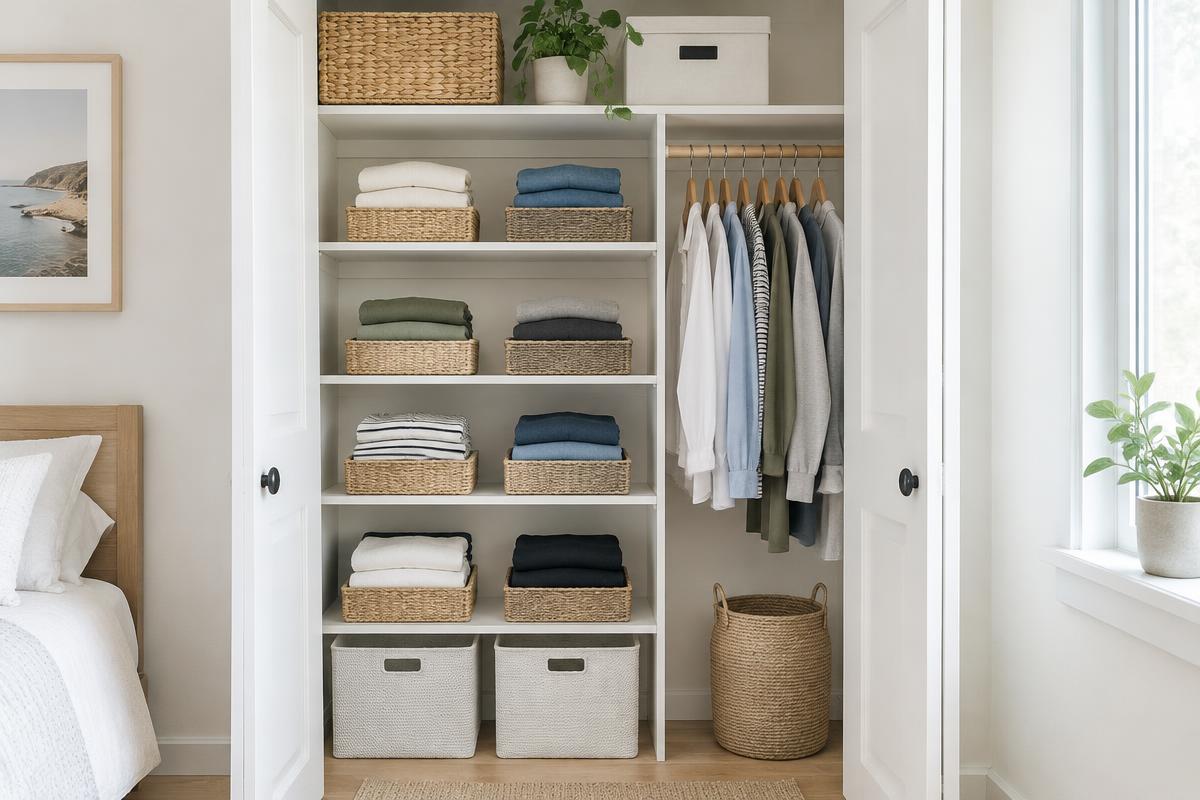
Clutter often builds up when items do not have an obvious place to go. After sorting, assign a spot for each category you keep. Baskets, simple bins and labeled shelves help everyone in the household know where things belong and where to return them.
Handle sentimental items last
Photos, letters and keepsakes tend to bring up feelings that slow decisions down. Leave them for the end, once you have practiced on easier categories. Some people choose a single memory box for the most meaningful pieces and take photos of the rest.
Build a simple maintenance habit
- Do a five-minute tidy at the end of each day.
- Try a one-in, one-out rule for clothes and kitchen items.
- Keep a donation bag in a closet and drop it off when it is full.
- Revisit one area each month to keep things from creeping back.
Be patient with the process
Every household is different, and there is no single right way to declutter. Some people enjoy a big weekend reset, while others prefer ten minutes a day. Whichever approach you choose, the goal is a home that feels easier to live in, not a picture-perfect space. Go at a pace that feels comfortable for you and your family.
Finally, consider how items leave your home. Local charities, libraries, schools and community groups often welcome donations in good condition, and many towns run recycling days for electronics and textiles. Knowing that your things will be useful to someone else can make letting go much easier.